
How to Fade Hyperpigmentation and Melasma: Building an Effective Skincare Routine
Dark marks can linger long after a breakout has settled, while melasma can leave broader patches across the cheeks, forehead or upper lip. If you have tried several products without much progress, it is tempting to reach for something stronger.
A better starting point is a consistent routine that combines appropriate brightening ingredients, comfortable hydration and daily sun protection. Each step should have a purpose—and your skin should remain comfortable throughout.
Understand the pigmentation first
Hyperpigmentation is an umbrella term for areas of skin that become darker because of excess pigment. Post-inflammatory hyperpigmentation often follows acne, eczema, picking or irritation. Addressing the original trigger helps prevent new marks while existing ones fade. [1]
Melasma is a particular form of hyperpigmentation, often influenced by hormones and sunlight. It can be persistent and prone to returning. Skincare can support a more even-looking complexion, but melasma sometimes needs a dermatologist-led treatment plan. [2]
1. Cleanse gently
Begin with a gentle cleanser that removes everyday dirt, sunscreen and makeup without leaving your face tight or uncomfortable. Use lukewarm water and your fingertips rather than vigorous rubbing.
A cleanser prepares the skin for the rest of your routine; it does not need to be an aggressive “brightening” treatment. If acne or eczema is still active, managing that condition matters as much as addressing the marks it leaves behind. [1]
2. Exfoliate selectively
Exfoliation can help remove surface buildup and improve the appearance of roughness, but it is not essential for everyone. More exfoliation does not necessarily mean faster fading. Aggressive scrubbing or strong acids can irritate the skin and worsen pigmentation, particularly in darker skin tones. [3]
If you choose an exfoliator, introduce it cautiously, following its directions and your skin’s response. Start with occasional use rather than adding it to every cleanse. Avoid combining several exfoliating products at once.
A Skinlight option: Our Salicylic Acid Brightening Exfoliator Liquid is an exfoliating option to consider, particularly when congestion is also a concern. Follow its rinse-off directions when starting. Its formula contains alcohol and lavender flower water, so it may not suit easily irritated skin. It is an optional step—not a requirement for treating melasma. [4]
3. Add a suitable brightening serum
Vitamin C is one ingredient used in products designed to improve uneven pigmentation. The particular formula, its tolerability and consistent use all matter; the ingredient name alone cannot guarantee results. [1,2]
A serum generally goes on after cleansing, before a richer cream. You can use it in the morning and keep exfoliation for a separate evening if that makes the routine easier to tolerate.
A Skinlight option: Our Glass Skin Brightening Vitamin C + Ferulic Acid Serum contains vitamin C derivatives, ferulic acid, vitamin E and hydrating ingredients. It offers a serum step for those seeking a brighter, more even-looking complexion. The formula contains fragrance, so check suitability if your skin is sensitive. [5]
4. Follow with one targeted cream
A brightening cream can provide another targeted step, but you do not need to layer several different pigmentation creams together.
A Skinlight option: Our Premium Face Cream with Chromabright combines Chromabright with a vitamin C derivative, glycerin, oils and other moisturising ingredients. Apply according to the label. It can fit into a cosmetic brightening routine, without being presented as a guaranteed treatment for melasma. [6]
For persistent melasma, a clinician may recommend options such as azelaic acid or a prescription combination cream. These are individual treatment decisions, not extra steps to add indiscriminately to an already active routine. [2]
5. Moisturise if your skin needs it
If your treatment cream already leaves your skin comfortably moisturised, another layer may be unnecessary. If your face feels dry, add a simple, fragrance-free moisturiser.
Keeping skin hydrated is especially helpful when exfoliating. Dryness, persistent stinging or peeling are reasons to simplify the routine rather than push harder. [3]
6. Finish your morning routine with sunscreen
Sun protection is a foundation of pigmentation care. Choose broad-spectrum SPF 30 or higher; SPF 50 with strong UVA protection is a useful daily choice. Apply generously as the final skincare step, before makeup.
For melasma, a tinted sunscreen containing iron oxides can provide additional protection against visible light from the sun. An untinted mineral sunscreen should not automatically be assumed to offer the same visible-light protection. Reapply at least every two hours outdoors and after swimming or sweating, and use shade and a wide-brimmed hat. [7]
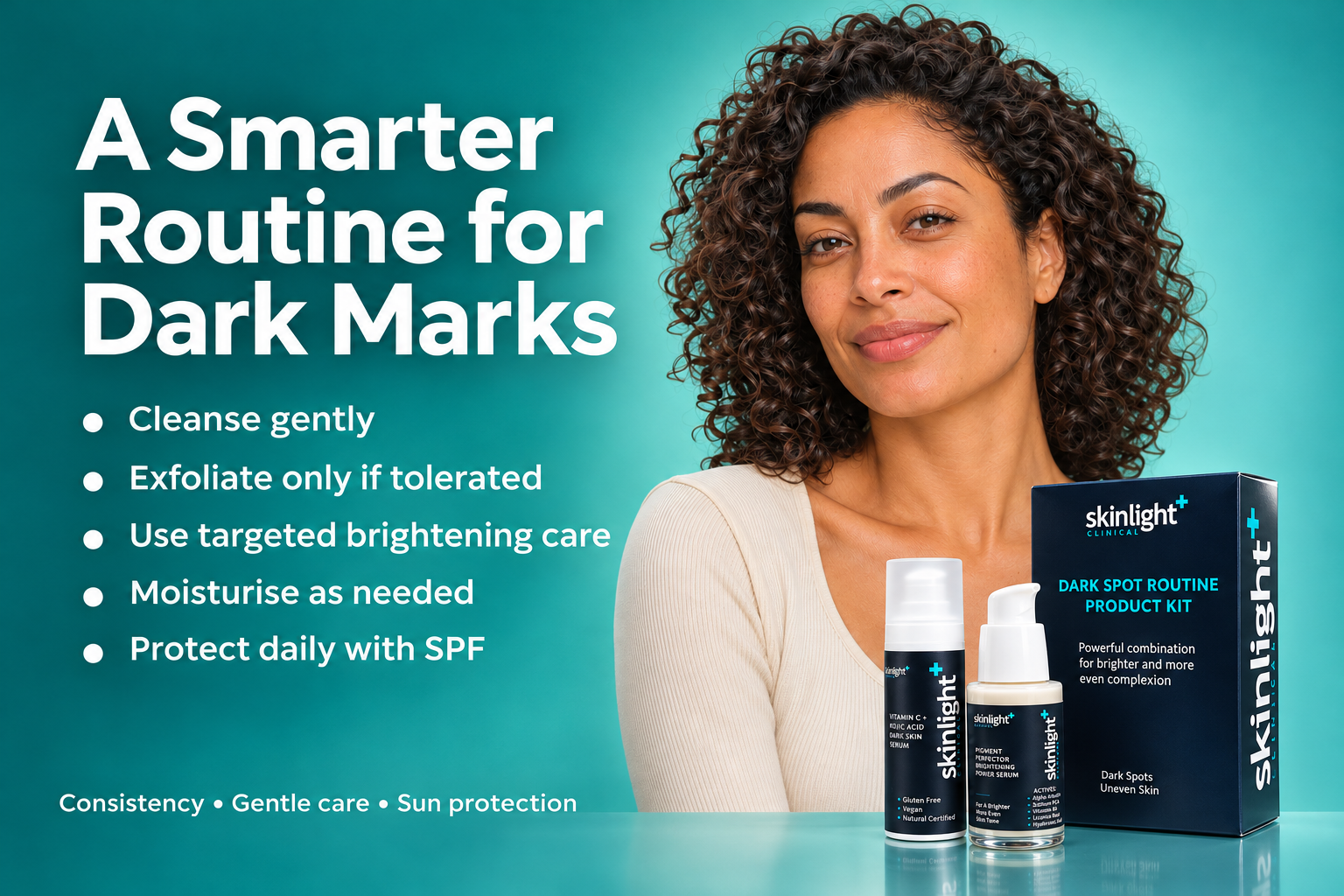
A practical morning and evening routine
| Morning | Evening |
|---|---|
| Gentle cleanse | Gentle cleanse |
| Vitamin C serum, if tolerated | Optional exfoliation on selected evenings |
| Targeted cream, if suitable for morning use | One targeted cream, as tolerated |
| Moisturiser, if needed | Moisturiser, if needed |
| Broad-spectrum sunscreen; consider a tinted iron-oxide formula for melasma | Keep non-exfoliating evenings simple |
This is a framework, not a requirement to use every step. Introduce new products individually and follow their instructions. If exfoliation and a treatment cream together cause irritation, separate them or omit exfoliation.
Give your skin time
Pigmentation improves gradually. Melasma treatment may take several months, and deeper post-inflammatory marks can also be slow to fade. Take occasional photographs in the same lighting rather than judging changes daily. [1,2]
If pigmentation persists, the diagnosis is uncertain, or a mark changes in shape, colour or size, seek medical advice. During pregnancy or breastfeeding, check treatment suitability with a healthcare professional.
The most useful routine is one you can follow consistently: gentle cleansing, suitable targeted care, enough moisture and dependable sun protection. Additional products should earn their place by helping your skin—not simply making the routine longer.
Explore the Skinlight Clinical collection to find serum, cream and optional exfoliation steps that suit your routine.
Editorial sources
- American Academy of Dermatology: How to fade dark spots in darker skin tones
- American Academy of Dermatology: Melasma diagnosis and treatment
- American Academy of Dermatology: How to safely exfoliate at home
- Skinlight: Salicylic Acid Brightening Exfoliator Liquid
- Skinlight: Glass Skin Brightening Vitamin C + Ferulic Acid Serum
- Skinlight: Premium Face Cream with Chromabright
- American Academy of Dermatology: Melasma self-care
Product listings establish product names and declared ingredients; they do not establish comparative effectiveness or clinical proof of melasma treatment.
Suggested SEO details
SEO title: How to Fade Hyperpigmentation & Melasma | Skinlight
Meta description: Build a gentle routine for dark marks and melasma with targeted skincare, optional exfoliation, moisturiser and daily sun protection.
Suggested URL slug: hyperpigmentation-melasma-skincare-routine
Recent Posts
-
How to Fade Hyperpigmentation and Melasma: Building an Effective Skincare Routine
Dark marks can linger long after a breakout has settled, while melasma can leave broader patches acr
-
The Secret to Brighter Skin? Don't Forget to Exfoliate!
Discover the essential skincare step that can help boost your brightening routine and reveal smoothe